
Eleven sites, one operator
A tour of the work: eleven live sites shipped mostly in the last few months, and the reason one person can run that many. Screenshots, not adjectives.
In Two sites, one operator I called danoh.com "a portfolio in the literal sense, a folder of things I made." That post argued for keeping the personal site and the consulting site separate. It never actually opened the folder.
This one does.
Here is the work: eleven live sites, most of them shipped in the last few months. Client builds, a couple of my own ventures, and the two personal sites you already know. I would rather show them than describe them, because a screenshot is more honest than an adjective. But first the thing that makes eleven of anything possible for one person.
Eleven brands, a handful of platforms
None of this is eleven separate stacks. Under the brands there are maybe four reusable spines, and almost every site is one of them wearing a costume.
The app spine: Next.js 16 (App Router, standalone output) on self-hosted Supabase for auth, one Postgres per app with deny-by-default row-level security, all of it in Docker behind Traefik with Watchtower rolling deploys, on a couple of Hetzner boxes. When I start a new app I am not choosing a stack. I am cloning a known-good one and changing only the parts that are genuinely different.
The directory spine: 312 Eats is a fork of 312 Built. Same marketplace engine, re-skinned for a new city and a new vertical by swapping a single config file.
The two-surface spine: Active Krew and AM Training Hall share one backend. A public lead page and an operator platform are two faces of the same system.
The design-system spine: AsianMasc and Kayrage share a "2000s Japanese magazine" visual language, factored into tokens and components so a second magazine is a re-theme, not a rebuild.
Reuse is the whole trick. Eleven sites is not eleven times the work. It is a small number of well-factored platforms, each pointed at a different audience.
Now the folder.
The coaching stack
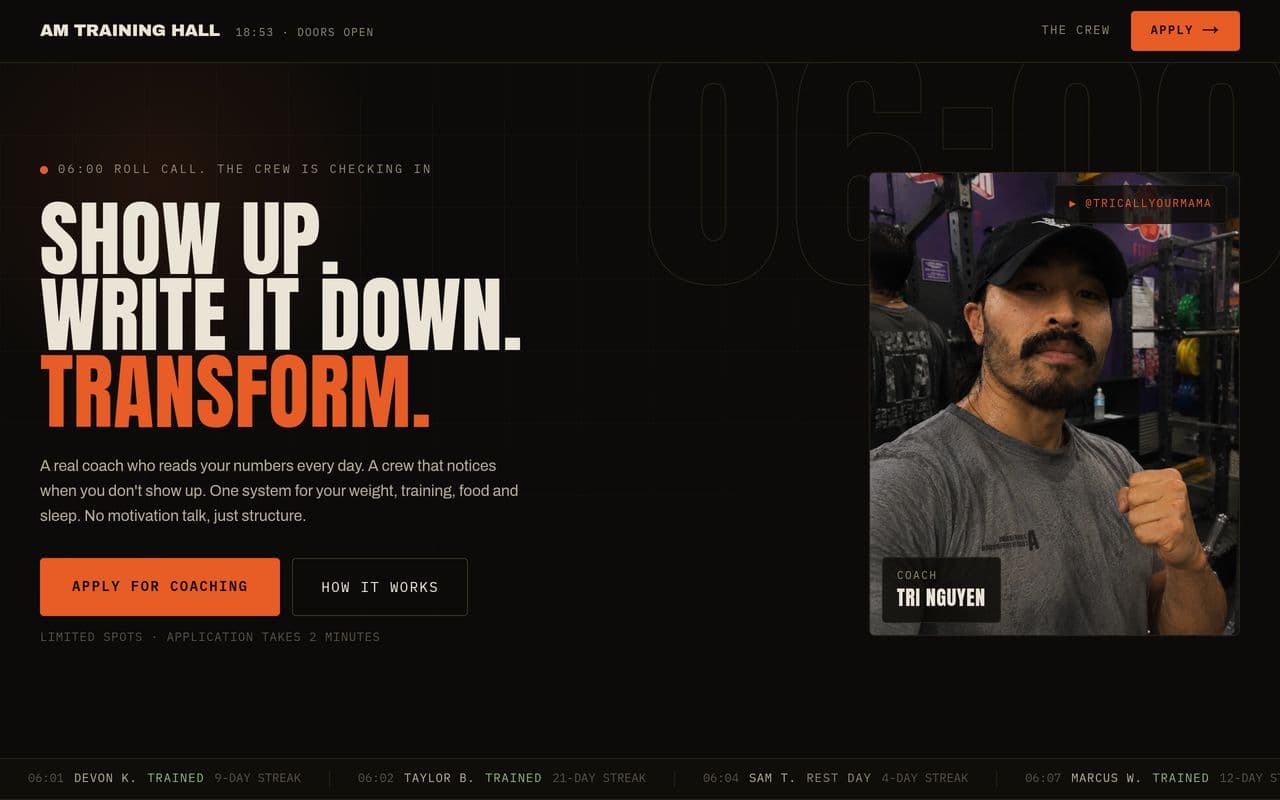
The longest-running client engagement. Coach Tri Nguyen was running a coaching practice on five apps glued together with screenshots: programming in one tool, delivery over DMs, notes in Notion, compliance in spreadsheets, community on Discord. He was the integration layer between all of them.
AM Training Hall collapsed that into one system: a coach dashboard with the whole roster's status, alerts, and compliance in a single view; members logging weight, workouts, sleep, and nutrition from the web app or from Discord, whichever fits the moment; a waitlist CRM with lead scoring and coach assignment; and a Discord bot (6AMbot) that automates the check-ins, roll calls, and compliance nudges that used to eat his evenings.
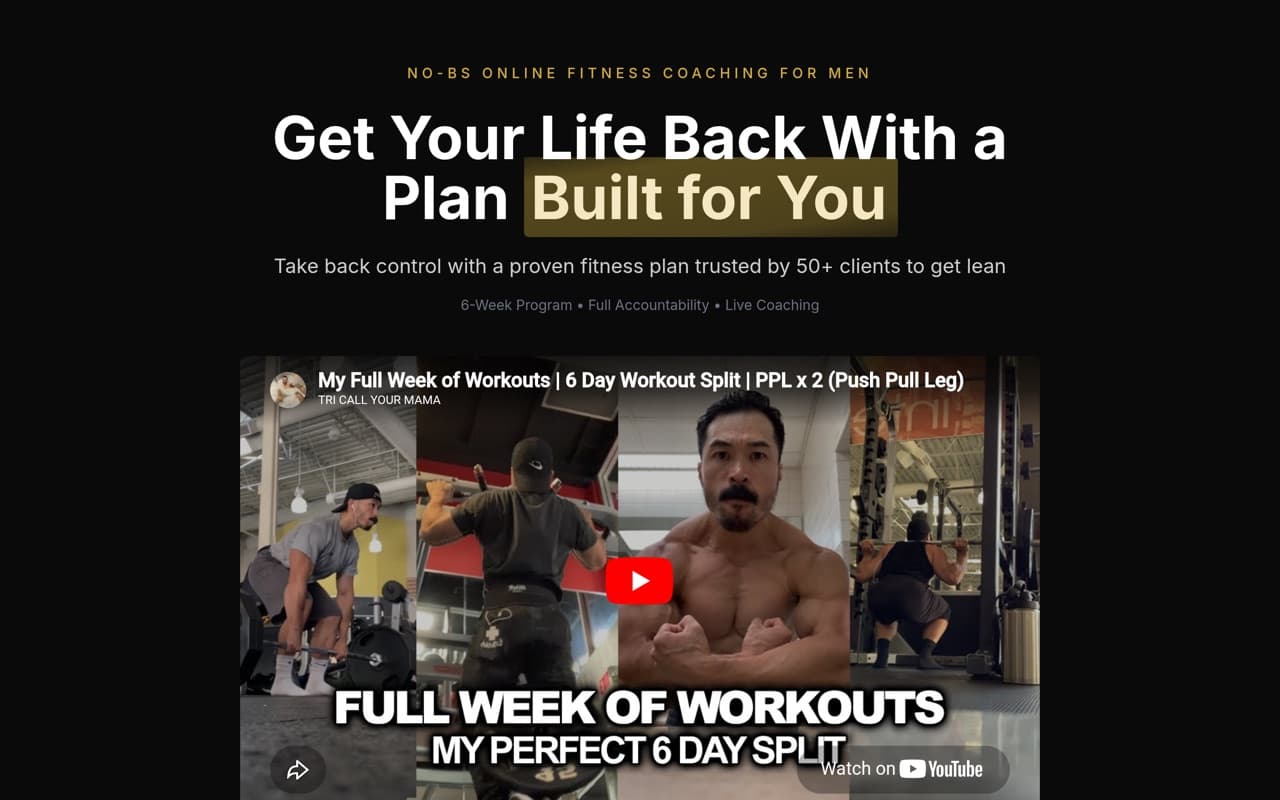
Then Active Krew: the public front door for the same practice. A brand-voiced lead page that routes serious applicants straight into the platform's waitlist CRM. Same backend, second surface. A cold visitor lands on Active Krew, applies, appears in the CRM inside AM Training Hall, gets coach-assigned, becomes a roster member.
The white-label AI workforce
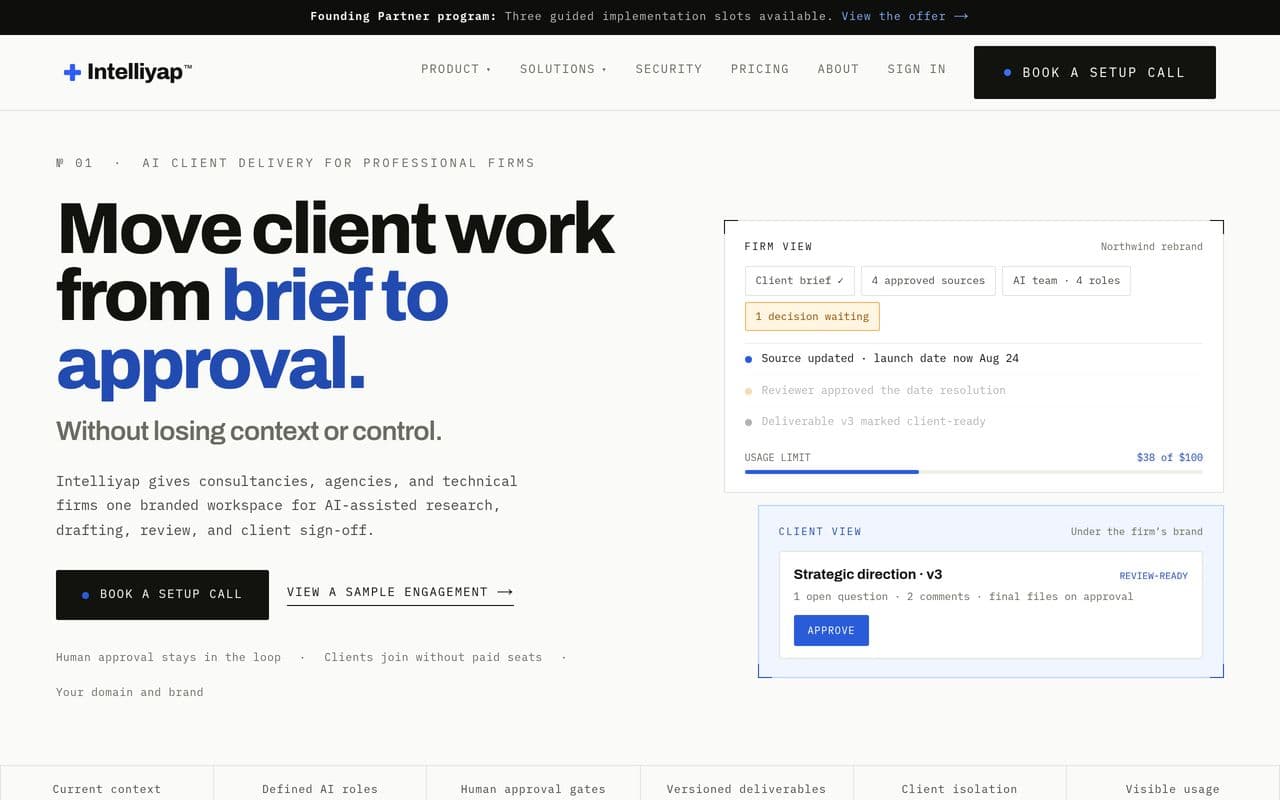
IntelliYap is the app spine at its most serious. It gives a professional-services firm a secure, governed AI workforce under its own name, white-labeled, so the firm's clients never see a third-party tool.
The interesting part is the boring part: the database is least-privilege with deny-by-default row-level security, so the database, not the model, decides what any given agent run is allowed to read; auth runs on a self-hosted Supabase stack the firm's data never leaves; and there is a SECURITY.md you are meant to read before you touch it. This is the depth-layer thesis behind Floeberg turned into a product: the impressive layer is the AI, but the layer that decides whether the firm can trust it with client data is the governance underneath.
Software that moves money
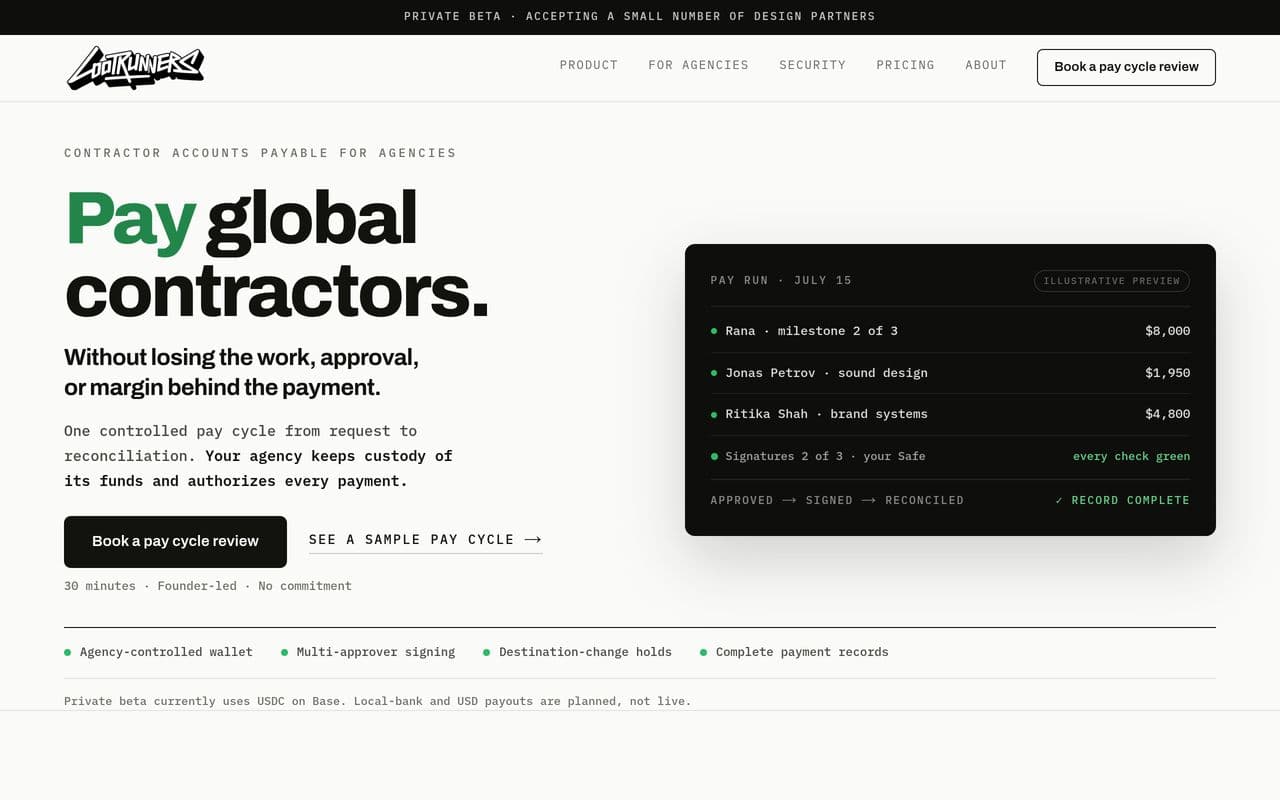
Lootrunners runs approval-gated contractor pay cycles for agencies and settles them in USDC on Base. The interesting part is what it deliberately does not do: it never holds your money. The app prepares the batch: one transfer per contractor, a double-entry ledger behind it, a signed evidence pack of exactly what will move. Your own multisig signs and sends it. Lootrunners never touches a hot wallet or a payout key. Once software sits in the path of real money, that non-custodial line is the whole product, and the row-level security under it (deny-by-default, forced on every table, scoped per request so an unset user context returns zero rows) stops being hygiene and becomes the reason an agency can trust it at all.
Two cities, one directory engine
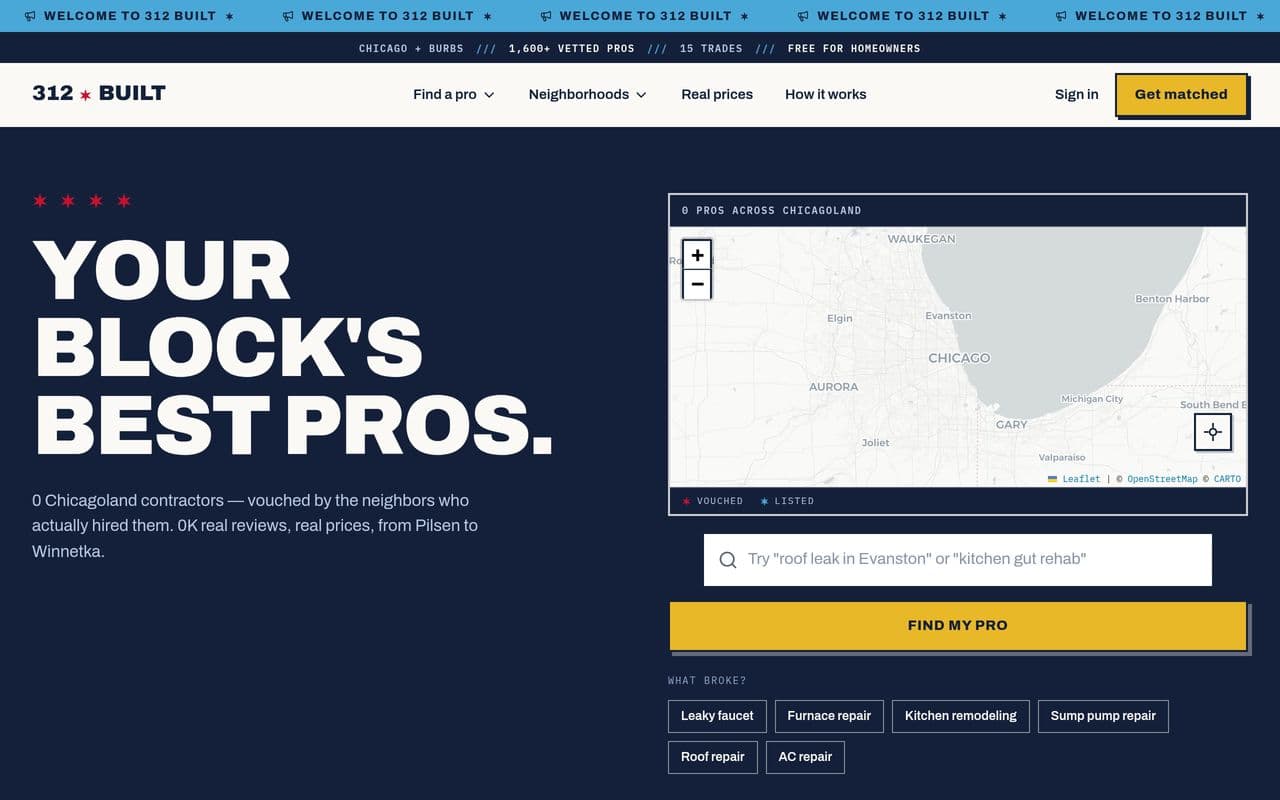
312 Built is a Chicago contractor marketplace, built as a production system rather than a directory mockup: 1,600+ contractors indexed across Chicagoland, area-based search on Leaflet maps, a claim flow that lets verified pros take ownership of their listing, and SEO routing per neighborhood and trade. Next.js, Drizzle on Postgres, auth and admin cleanly separated.
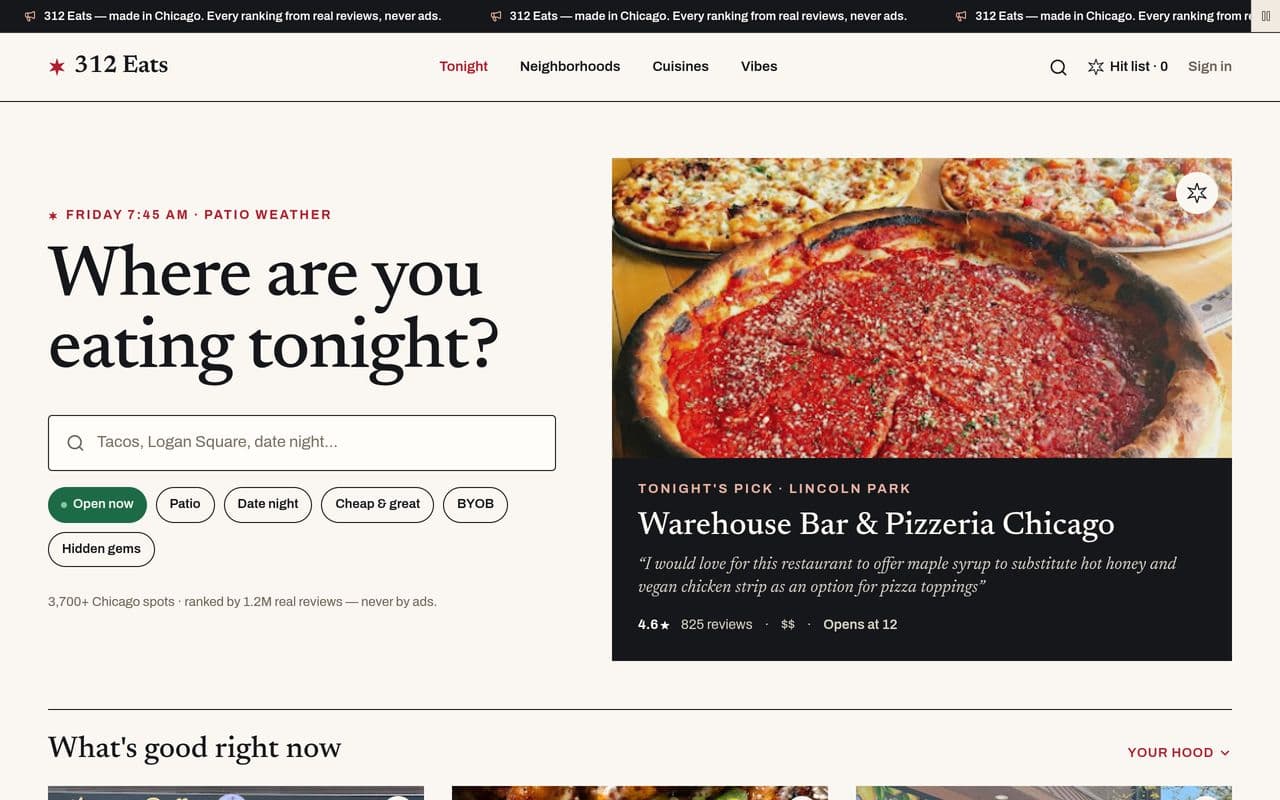
312 Eats is what happens when a marketplace engine is factored well: it is a fork of 312 Built pointed at restaurants. Roughly 3,700 Chicago spots pulled from Google Maps, enriched with Claude-generated descriptions and scores in a batch pipeline, and surfaced across programmatic cuisine × neighborhood × vibe pages. The entire re-skin lives in one city.config.ts. Swap it and you have launched a new city or vertical.
Magazines with a backend
AsianMasc reads like a magazine and runs like a platform. It is a two-world publishing system: the AsianMasc magazine and the WuxiaMaxxing serial-fiction universe, one family with two design languages (2000s Japanese magazine and classic Chinese serial novel) over one shared set of design tokens. Content ships through a real editorial gate (draft to staged to published), with a Discord community of more than 1,400 behind it.

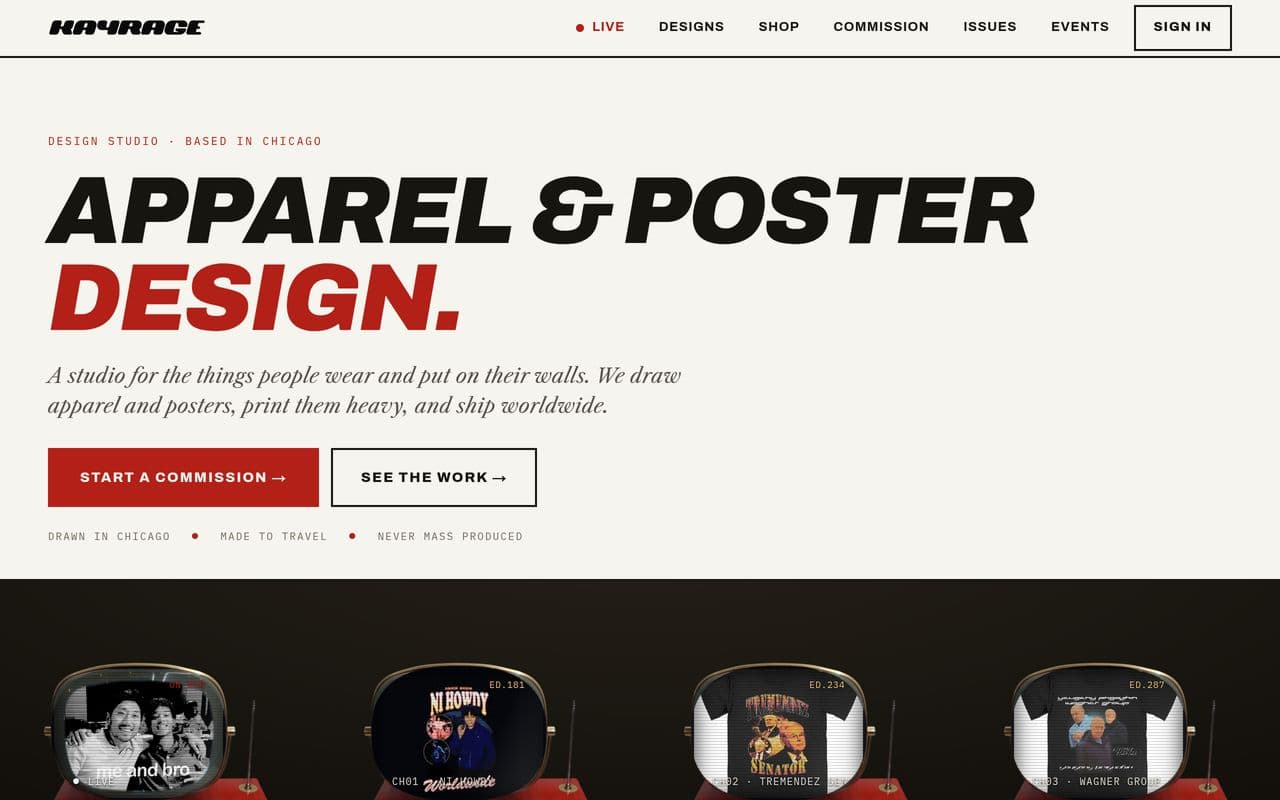
Kayrage shares that magazine DNA and adds a live channel. It is a technology-and-culture men's lifestyle title: stories of artists, DJs, founders, and athletes, a live Owncast stream, a small-run store, and reader membership. Same app spine underneath, self-hosted auth and all.
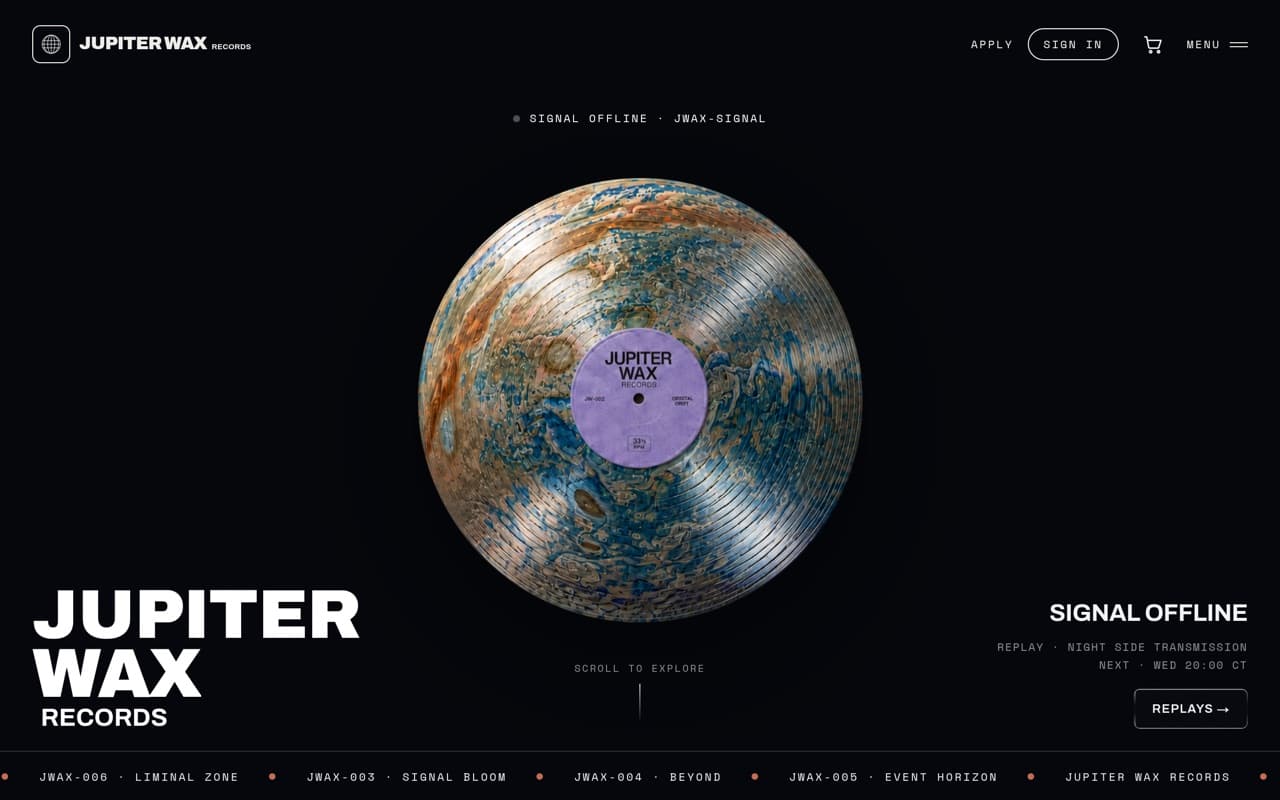
And Jupiter Wax: a site for an independent Chicago electronic-music label, built live-broadcast-first. Even this one runs the same spine (Next.js 16, Prisma on Postgres, self-hosted Supabase in production), with demo submissions and the newsletter wired through server actions and the studio, streaming, and commerce phases staged behind the public launch.
The personal two
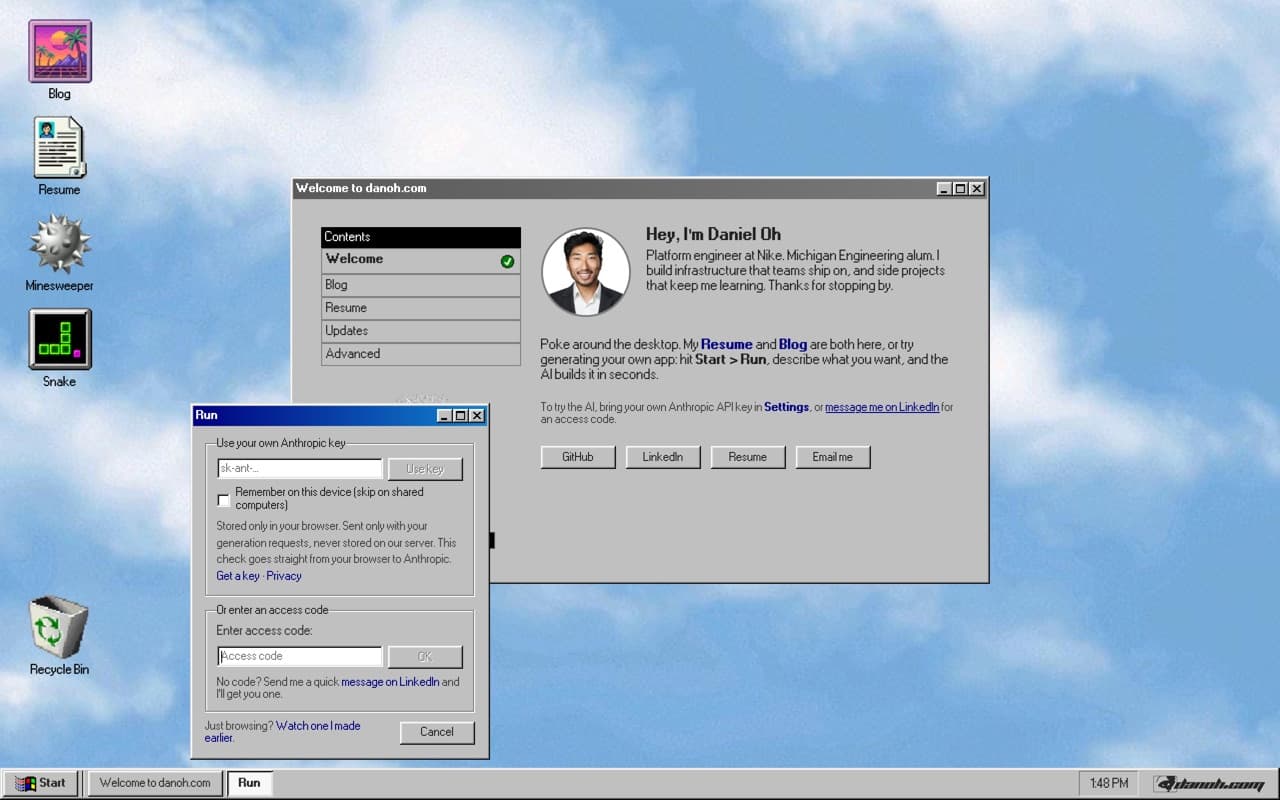
You are standing in one of them. danoh.com is a playable Windows 98 desktop with a blog, a pile of experiments, and an AI app generator that builds a working program in a window from a sentence you type. It is the folder this post opens.
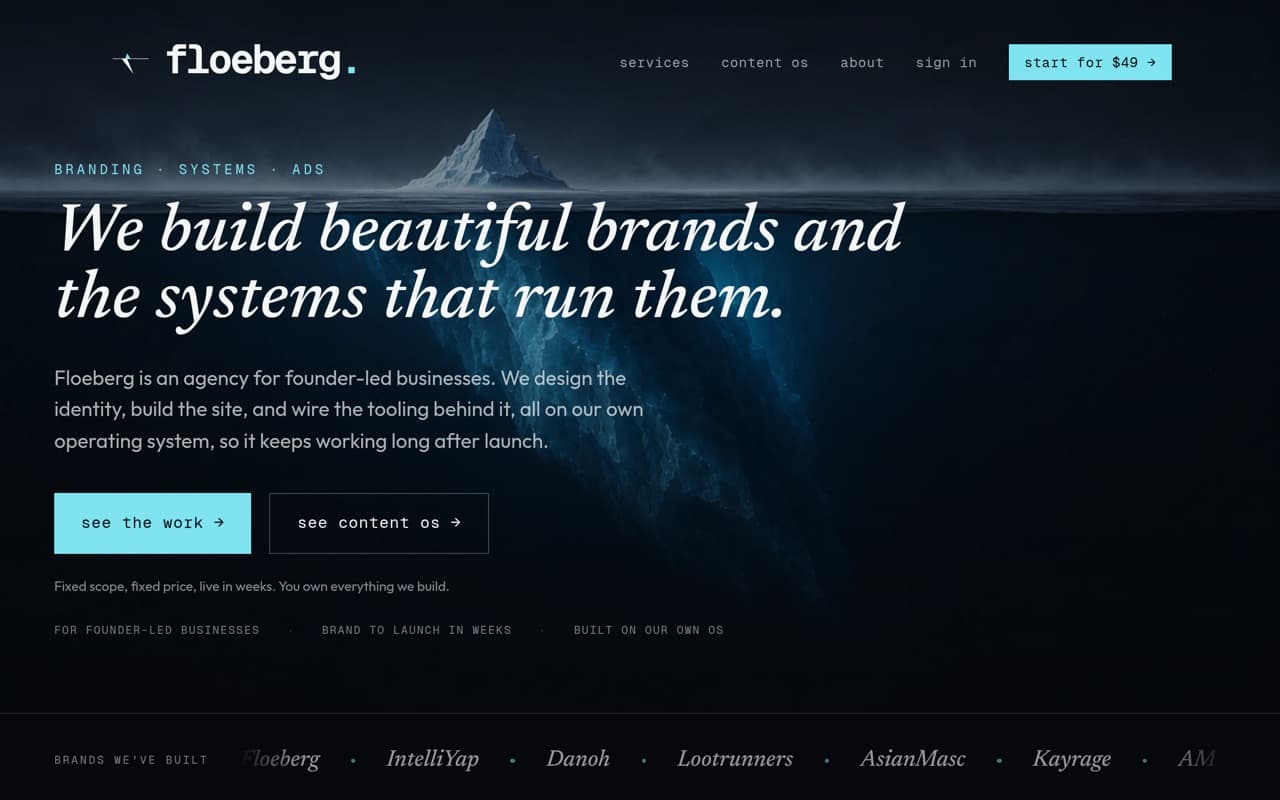
And Floeberg, the other half of the split: the studio and the depth-layer consulting practice, built on its own content operating system. The build log covers its stack in detail; it runs the same self-hosted spine as everything else here, because a brand about owning your foundations should own its own.
The operator's note
The tooling is reusable. The taste is not.
Every site above shares a spine with several others, and that is the only reason one person ships this many. But the platform is the copy-paste part. What could not be cloned was the decision, per brand, about who the reader is and what the site is allowed to sound like. Active Krew is blunt because coaching men who want results is a blunt business. AsianMasc is a glossy magazine because its audience came for a world, not a product. IntelliYap is quiet and institutional because it is asking a law firm to trust it with client data. Eleven positions, eleven voices, eleven judgment calls that no config file makes for you.
That is the same division of labor I wrote about in Letting Fable 5 loose: the stack executes, and I decide. It just turns out to scale further than I expected. The engine is one thing. Eleven brands is what you get when you point it at eleven different people and make the human calls in between.
If you want the depth-layer version of this for your own stack, that is what floeberg.com is for. If you just like watching things get built, you already know where the desktop is.
© 2026 Daniel Oh · danoh.com/blog/eleven-sites-one-operator